
Soundtrack Your Brand Review and Alternatives for Businesses
Compare Soundtrack Your Brand with leading business music platforms. Explore features, pricing, multi-location management, licensing, and AI-powered audio advertising tools.
July 2, 2026
Background music has become a standard part of the customer experience for businesses around the world, including restaurants, cafes, retail stores, hotels, gyms, salons, and many other commercial environments.
As businesses increasingly recognize the impact of music on atmosphere and customer perception, specialized business music platforms have emerged to help manage music in commercial settings.
One of the best-known platforms in this category is Soundtrack Your Brand.

Originally created to address the needs of commercial music environments, Soundtrack Your Brand has become a popular choice among businesses looking for centralized music management, curated playlists, and business-oriented features.
However, as the market evolves, many businesses are also exploring alternative solutions that offer different pricing models, additional functionality, or new approaches to managing audio experiences.
This guide reviews Soundtrack Your Brand, explains who it is designed for, and explores what businesses should consider when evaluating alternative music platforms.
Not sure how business music licensing works? Start with our complete guide to background music for business before comparing providers.
What Is Soundtrack Your Brand?
Soundtrack Your Brand is a music platform designed specifically for commercial environments.
Unlike consumer streaming services that focus on individual listeners, Soundtrack Your Brand was built to serve businesses that need music across customer-facing environments.
The platform is widely used by restaurants, cafes, retailers, hotels, gyms, and other businesses that want a structured approach to music management.
Its focus is not simply giving access to music. Instead, it provides tools that help organizations manage music consistently across one or multiple locations.
Core capabilities typically include:
- business-focused music streaming
- curated playlists
- multi-location management
- centralized administration
- scheduling capabilities
- brand consistency tools

Over the years, Soundtrack Your Brand has become one of the most recognizable names in the business music industry.
For many organizations, it represents a significant step beyond using consumer streaming platforms inside commercial environments.
Why Business Music Platforms Exist
Many business owners initially assume that playing music in a commercial environment is similar to listening at home.
In practice, commercial environments often have different operational requirements.
A single-location cafe may only need one playlist and one device. A restaurant group with twenty locations may require centralized control, scheduling tools, and consistent music policies across every venue.
As businesses grow, music management often becomes an operational challenge rather than a simple entertainment choice.
Questions that commonly arise include:
- How can playlists remain consistent across locations?
- Who controls music selection?
- How should music change throughout the day?
- How can managers monitor music remotely?
- How can seasonal campaigns be coordinated?
Business music platforms were created to solve these types of problems.
Who Typically Uses Soundtrack Your Brand?
Soundtrack Your Brand is commonly used across a variety of industries.
Restaurants
Restaurants use music to shape dining experiences, influence atmosphere, and support overall brand positioning.
A premium restaurant may prefer sophisticated background music, while casual dining locations may focus on energetic playlists that create a lively atmosphere.
Music becomes part of the overall guest experience alongside food quality, service, and interior design.
Cafes
Cafes frequently rely on carefully curated playlists to create welcoming environments that encourage customers to stay longer.
Many coffee shops view music as part of their identity and customer experience strategy.

Retail Stores
Retail businesses often use music to reinforce brand positioning and influence shopping environments.
Luxury retailers, fashion stores, supermarkets, and specialty shops may all use different music approaches depending on customer demographics and brand goals.
Hotels
Hotels use music throughout multiple guest touchpoints.
Lobby areas, restaurants, lounges, spas, and wellness spaces often require different music environments that align with guest expectations.
Gyms
Fitness businesses depend heavily on music to support energy levels, member engagement, and class experiences.
Music is often one of the most important environmental factors inside fitness facilities.
When Soundtrack Your Brand Makes Sense
One of the strengths of Soundtrack Your Brand is its focus on business operations.
Organizations that manage multiple locations often benefit from centralized music administration.
Examples include:
- restaurant chains
- cafe franchises
- retail networks
- hotel groups
- fitness chains
For these organizations, maintaining consistency across locations can be just as important as the music itself.
Corporate teams often want visibility into what is playing across their locations and the ability to manage music remotely.
This is where dedicated business music platforms typically provide value beyond consumer music services.
Music Management Across Multiple Locations
As businesses expand, music management becomes increasingly complex.
A single independent cafe can often manage music informally.
A company operating ten, twenty, or fifty locations faces a different challenge entirely.
Without centralized management, every location may develop its own music habits.
This can lead to inconsistent customer experiences, varying brand perception, and operational inefficiencies.
Multi-location businesses frequently look for:
- centralized administration
- remote management
- location-specific controls
- scheduling tools
- playlist standardization
- reporting capabilities
These operational requirements are a major reason why business music platforms continue to grow in popularity.
Why Businesses Look for Alternatives
While Soundtrack Your Brand is a well-established platform, it is not automatically the perfect fit for every business.
As companies evaluate their needs, many begin looking at alternative solutions that may offer different features, pricing models, or approaches to managing in-store audio.
In most cases, businesses are not necessarily dissatisfied with music quality. Instead, they are evaluating broader operational requirements.
Common reasons businesses explore alternatives include:
- budget considerations
- simpler onboarding requirements
- different management preferences
- audio advertising capabilities
- additional customer communication tools
- more flexible business workflows
As business audio evolves, music is becoming only one part of the overall customer experience strategy.
Soundtrack Your Brand vs Modern Business Music Platforms
Business music platforms share many similarities, but they often differ in their focus and long-term vision.
| Feature | Soundtrack Your Brand | Modern Business Music Platform |
|---|---|---|
| Business-focused music streaming | ✓ | ✓ |
| Curated playlists | ✓ | ✓ |
| Multi-location management | ✓ | ✓ |
| Centralized administration | ✓ | ✓ |
| Scheduling tools | ✓ | ✓ |
| Brand consistency controls | ✓ | ✓ |
| Designed for independent businesses | Limited | ✓ |
| Promotional audio announcements | Limited | ✓ |
| AI-generated voice advertising | ✗ | ✓ |
| Audio campaign creation | ✗ | ✓ |
| Marketing-focused audio tools | ✗ | ✓ |
| Unified music and messaging platform | Limited | ✓ |
For many businesses, the most significant difference is no longer access to music. The real difference increasingly comes from how audio is managed and used throughout the customer journey.
If you'd like to better understand how business music licensing works, why commercial environments require licensed music, and what businesses should consider when choosing a music solution, read our Business Music Licensing: Complete Guide.
What Small Businesses Actually Need
Many independent business owners have very different priorities than large enterprise organizations.
A local restaurant, neighborhood cafe, boutique hotel, salon, or independent gym often focuses on simplicity rather than complexity.
Most small businesses are not looking for dozens of advanced management tools.
Instead, they typically want:
- great music
- simple setup
- reliable operation
- predictable pricing
- easy day-to-day management
- professional customer experience
Small business owners already manage staffing, inventory, marketing, customer service, accounting, and operations.
Music should support the business rather than create additional administrative work.

This is one reason many businesses increasingly look for platforms designed around practical day-to-day operations rather than enterprise-level complexity.
How Businesses Evaluate Music Platforms
Choosing a business music platform is rarely just about finding access to songs. Most organizations evaluate music providers based on a combination of operational, financial, and customer experience factors.
For small businesses, simplicity is often one of the most important considerations. Owners typically want a platform that can be deployed quickly, managed easily, and operated without extensive training.
As businesses grow, additional requirements emerge. Multi-location operators often prioritize centralized administration, reporting capabilities, and consistent customer experiences across every location.
When evaluating music platforms, businesses commonly consider:
- music quality and playlist selection
- ease of setup and onboarding
- daily management requirements
- multi-location support
- scalability as the business grows
- customer support and reliability
- integration with broader business operations
- marketing and communication capabilities
Many companies begin by focusing on music libraries and playlist options. However, after implementation, operational efficiency often becomes equally important.
A platform that saves managers time, simplifies administration, and helps maintain consistency across locations can provide significant value beyond the music itself.
For this reason, businesses increasingly evaluate music platforms as part of their broader customer experience strategy rather than as standalone entertainment tools.
Soundtrack Your Brand Pricing Considerations
Pricing is often one of the first factors businesses consider when comparing music platforms. However, the lowest monthly fee does not always represent the best long-term value.
Businesses should evaluate pricing within the context of their operational needs, number of locations, management requirements, and future growth plans.
A single-location cafe may have very different requirements than a restaurant chain operating dozens of venues.
Important considerations include:
- number of business locations
- management complexity
- administrative time requirements
- scalability as the company grows
- additional business features
- customer communication capabilities
Some businesses focus exclusively on subscription costs. Others evaluate total operational efficiency, including the time required to manage playlists, coordinate locations, and maintain consistency.
As audio technology evolves, many companies also consider whether a platform provides value beyond music alone.
Features such as promotional audio, centralized management, and customer communication tools may help businesses consolidate multiple workflows into a single platform.
Ultimately, the most cost-effective solution is often the platform that best aligns with the organization's operational needs and long-term goals.
Music Is No Longer Enough
For years, background music was viewed as a standalone component of the customer experience.
A business selected playlists, pressed play, and rarely thought about audio again.
Today, customer expectations are changing.
Businesses increasingly use audio as a communication channel.
Customers hear:
- promotions
- special offers
- seasonal campaigns
- brand messages
- loyalty program reminders
- operational announcements
This shift is transforming audio from a passive background element into an active business tool.
Music, Promotions and Customer Communication
Modern businesses often need more than playlists.
They want the ability to communicate directly with customers while maintaining a professional atmosphere.
Examples include:
- a restaurant promoting a lunch menu
- a retail store announcing a seasonal sale
- a hotel sharing guest information
- a gym promoting membership offers
- a salon introducing a new service
Historically, creating these announcements required agencies, copywriters, voice actors, and production teams.
For many small businesses, that process was too expensive and time-consuming.

New technologies are changing this dramatically.
AI-Powered Audio Advertising
AI is rapidly transforming how businesses create audio content.
Instead of recording announcements manually, businesses can now generate professional promotional messages within minutes.
This creates opportunities across many industries.
Restaurants
Restaurants can generate lunch promotions, happy hour announcements, seasonal menu updates, and event messaging without requiring traditional production resources.
Instead of hiring voice talent or working with external agencies, restaurant managers can create professional promotional messages in minutes. This makes it easier to keep campaigns current and relevant throughout the year.
Audio can also help restaurants highlight limited-time offers, chef specials, holiday menus, and loyalty programs while maintaining a consistent customer experience.
Cafes
Cafes can promote loyalty programs, new products, seasonal beverages, and special offers directly within their customer environment.
For independent coffee shops, audio announcements provide an additional communication channel that complements in-store signage and social media marketing.
Short promotional messages can help increase awareness of premium drinks, food pairings, seasonal products, and customer rewards programs.
Retail Stores
Retailers can quickly create sale announcements, clearance campaigns, holiday promotions, and product highlights.
Large retail chains have used in-store audio marketing for years. AI-powered tools now make similar capabilities accessible to smaller retailers without dedicated marketing teams.
Stores can adapt messaging to seasonal campaigns, inventory priorities, or special promotions while maintaining a professional brand voice throughout the customer journey.
Hotels
Hotels can communicate guest information, amenities, seasonal services, and special packages through professionally produced audio messages.
Audio can help reinforce premium guest experiences while providing useful information about restaurants, spa services, wellness facilities, loyalty programs, and local attractions.
For hospitality businesses, professionally produced audio messaging can support both customer satisfaction and revenue generation.
Gyms
Fitness businesses can promote memberships, personal training services, group classes, and seasonal campaigns.
Announcements can be scheduled throughout the day to align with peak traffic periods and specific customer segments.
This allows gyms to communicate important information while maintaining the high-energy atmosphere members expect.
Salons
Salons can highlight premium treatments, loyalty programs, new services, and appointment opportunities.
Audio messaging can help increase awareness of higher-value services while supporting customer retention initiatives.
For many beauty and wellness businesses, professional audio content becomes another way to strengthen brand perception and improve customer engagement.
For many businesses, AI-powered audio advertising represents one of the most exciting developments in customer communication.
The Future of Business Audio
Business audio is changing rapidly.
For decades, music was viewed primarily as background atmosphere. Businesses selected playlists, adjusted volume levels, and treated audio as a supporting element of the customer experience.
Today, audio is becoming a strategic communication channel.
Businesses increasingly use sound not only to influence atmosphere, but also to communicate directly with customers, reinforce brand identity, and support marketing objectives.
Several trends are driving this transformation.
The first is the growing importance of customer experience. Businesses are competing not only on products and services, but also on the quality of the environments they create.
The second is the rise of centralized management. Multi-location organizations increasingly expect the same level of control over audio that they already have for digital marketing, operations, and customer communications.
The third is artificial intelligence.
AI-powered tools are making professional-quality audio production accessible to businesses of all sizes. Tasks that previously required agencies, voice actors, and production teams can now be completed in minutes.
This allows businesses to create:
- promotional announcements
- seasonal campaigns
- loyalty program messaging
- location-specific communications
- event promotions
- brand awareness campaigns
As these technologies continue to improve, businesses will increasingly manage music and customer communication through unified platforms rather than separate systems.
The result is a future where music, promotions, announcements, and customer engagement work together as part of a single audio strategy.
For businesses that want to create memorable customer experiences, audio is becoming far more than background music. It is becoming an essential part of how brands communicate, differentiate themselves, and build lasting relationships with customers.
How EasyMusicLicense Helps Businesses
EasyMusicLicense was designed around a simple idea: businesses should be able to manage their entire audio experience from a single platform.
Rather than focusing exclusively on background music, EasyMusicLicense combines multiple audio capabilities within one environment.
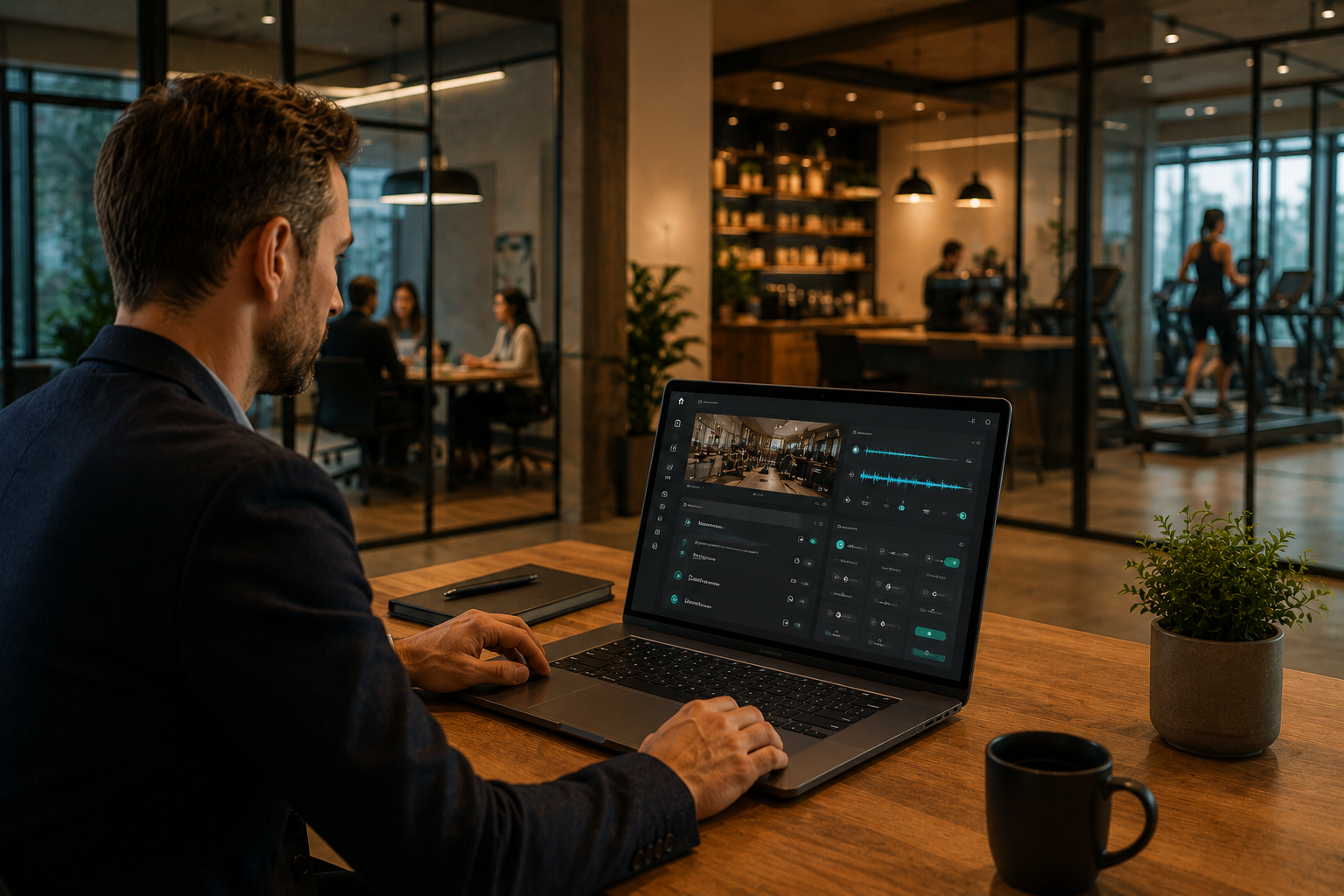
Key capabilities include:
- licensed background music
- business-focused music management
- simple subscription pricing
- commercial environment support
- playlist management tools
- professional AI-generated voice advertising
- audio campaign creation
- global business music licensing support
The goal is not simply to provide music.
The goal is to help businesses create better customer experiences through music, communication, and modern audio technology.
Frequently Asked Questions
What is Soundtrack Your Brand?
Soundtrack Your Brand is a business music platform designed for commercial environments such as restaurants, cafes, retail stores, hotels, and gyms.
Is Soundtrack Your Brand good for small businesses?
It can be a suitable option for many businesses, though some organizations may prefer platforms with different pricing structures or additional functionality.
What alternatives to Soundtrack Your Brand exist?
Businesses often compare multiple music platforms based on pricing, management features, scalability, and additional capabilities such as audio advertising.
What is the best music platform for restaurants?
The answer depends on operational requirements, budget, desired features, and overall business goals.
What is the best music platform for retail stores?
Retail businesses often look for a combination of music management, brand consistency, and customer communication capabilities.
Can AI create professional audio ads?
Modern AI systems can generate realistic promotional audio content that helps businesses communicate with customers efficiently.
Can I manage multiple locations from one platform?
Many business music platforms offer centralized administration and multi-location management features.
Why are businesses using audio advertising?
Audio advertising allows businesses to communicate promotions, announcements, and brand messages directly within customer environments.
Can small businesses benefit from business music platforms?
Yes. Many small businesses use dedicated music platforms to simplify management and create consistent customer experiences.
What is the difference between Spotify and business music platforms?
Consumer streaming platforms focus on personal listening, while business music platforms are designed around commercial environments and operational requirements.
Do business music platforms support multiple locations?
Many platforms provide centralized management tools that help organizations manage music across multiple venues.
Conclusion
Soundtrack Your Brand remains one of the most recognized business music platforms in the market and continues to serve many organizations successfully.
However, business audio is evolving rapidly.
Many companies now require more than music alone. They want tools that help manage customer experiences, promotional messaging, and operational communication from a single platform.
As AI-powered audio technologies continue to mature, businesses gain access to capabilities that were previously available only to large organizations with dedicated production resources.
The best solution ultimately depends on the size of the business, operational requirements, customer experience goals, and long-term audio strategy.
Ready to simplify music and audio marketing?
Start your free trial and manage licensed music, playlists, and AI-powered audio advertising from one platform.
Start Free TrialGet your music license today
Start playing licensed music in your business in under 5 minutes.
View Pricing